


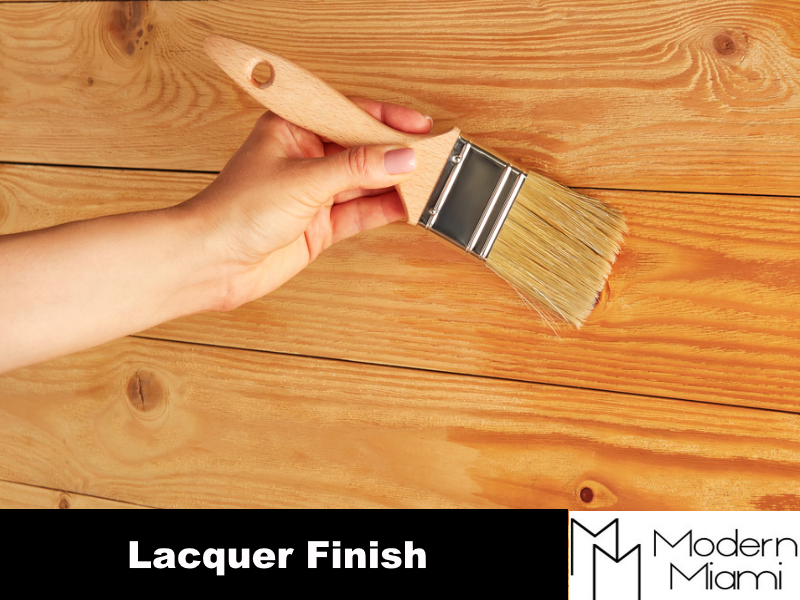
A lacquer finish is a shiny top coat typically used to protect wood and metal from aging, wear, and liquids. The French word “lacre,” which means “a kind of sealing wax,” is the origin of the word “lacquer”. Wax and resin from trees were used to create the first lacquer finishes. Modern high-quality furniture has a lacquer finish to increase durability and damage resistance.
What are the Kinds of Lacquer Finish?
A nitrocellulose lacquer finish is typically employed for musical instruments including guitars, pianos, and violins. Automobiles were also coated with nitrocellulose lacquer finish in the middle of the 20th century. With time, the amber red of nitrocellulose lacquer finishes increases. As it is less resistant to liquids, abrasions, and chemicals than other varieties, this lacquer finish may crack or “craze” with time.
An acrylic lacquer finish is more robust and scratch-resistant than a nitrocellulose lacquer finish. The 1950s saw the introduction of this lacquer finish on birch, ash, and maple woods.
A catalyzed lacquer finish is comprised of chemicals and produces a tougher finish than nitrocellulose and acrylic lacquer finishes.
A waterborne lacquer finish is less hazardous because it is made of materials that are better for the environment. This lacquer finish, however, provides less protection for wood.
The urushiol-based lacquer finish comes from the East Asian wax and lacquer trees that generate urushiol. In that region, furniture, musical instruments, and lacquerware frequently have this lacquer finish.
How is Lacquer Finish Different From Varnish?
In terms of longevity and shine, lacquer finish is generally superior to varnish. Varnish has a lower gloss level than lacquer, making lacquer finish more aesthetically pleasing. In comparison to varnish, a lacquer finish offers higher protection against abrasion, liquids, chemicals, and scratches. For high-quality furniture, the lacquer finish is used more frequently than varnish.
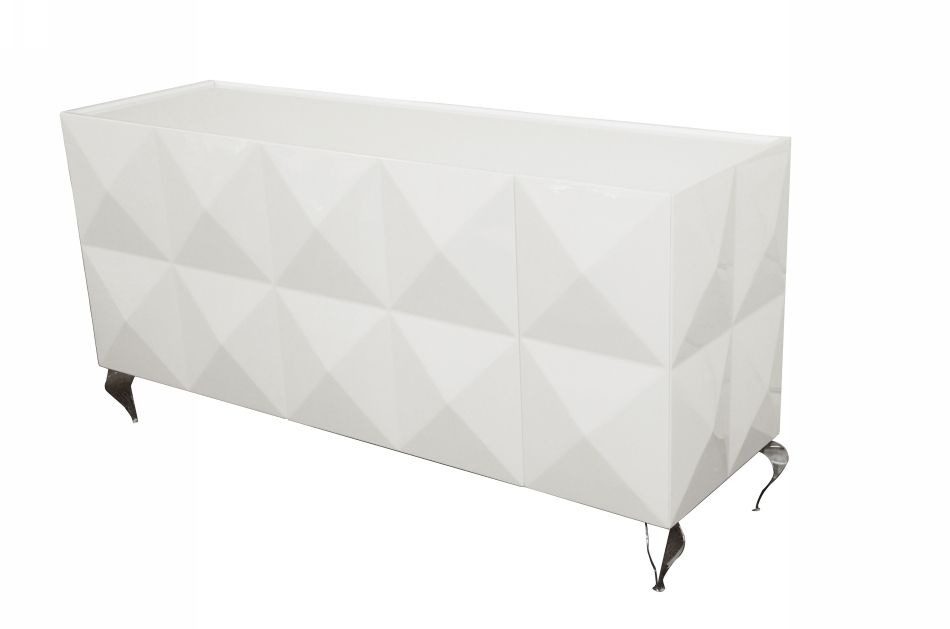
Check Modern Miami for modern furniture pieces with Lacquer Finish.

What are the Advantages and Disadvantages of Lacquer Finish?
The following are the advantages of a lacquer finish.
- It provides for a strong and hard coating.
- It is resistant to fluids and chemicals. Some lacquer finishes are resistant to yellowing and clouding.
- It requires little maintenance.
The following are the disadvantages of a lacquer finish.
- It needs special equipment and a designated area for application.
- It emits toxic gases upon first application.
- It can be difficult to undo scratches and dents on the lacquer finish.
