


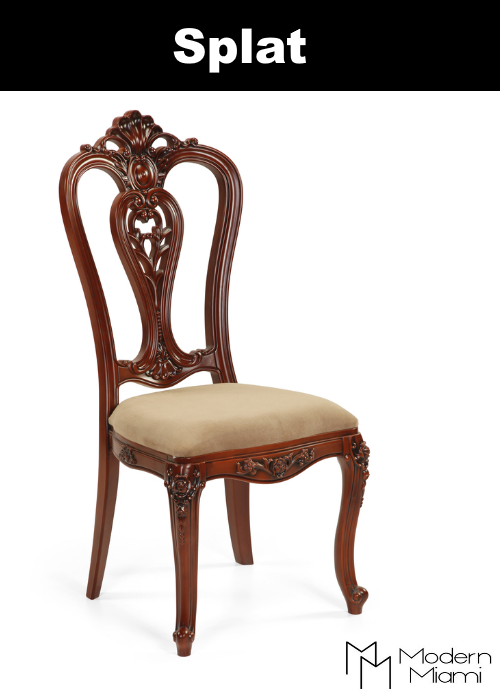
A splat is the chair’s primary back or spine joined to the chair frame or skeleton which supports the occupant. A decorative splat gives the design of a chair a boost and becomes the furniture’s main aesthetic. A chair with a splat back typically gives a more stately feeling in an area.
Who is Notable in Designing Chair Splat?
Thomas Chippendale, a London cabinetmaker, used a variety of splat patterns that combined Gothic, English, Chinese, and French elements. The most well-known chair design by Chippendale is a wide-seat ribbonback with a cupid’s bow-shaped back rail and a splat that is perforated and carved into interlocking ribbons in the French Rococo style. In 1754, Chippendale released his book, The Gentleman and Cabinet Maker’s Director.
A perforated center splat with pointed gothic arches and ogee curves distinguishes chairs with a gothic Chippendale design. From the top, the Chippendale chair’s back is wider, and the rail curves into a shallow “s” in the middle. The chair rail’s ends project upward to create “ears.”
What are the Styles of Chair Splat?
The fiddle chair is so named because of its unique splat design, which includes a central board fashioned like a violin. The fiddle-style splat is a common characteristic of Queen Anne furniture.
Colonial America and New England both made extensive use of the Windsor chair. The Windsor chair splat is still present in the back’s center positioned side by side chair slats. The Windsor chair splat can feature tapers, bow braces, and double bows.
Other designs of splat on chairs can include marquetry (inlays in veneer), intricate carvings, perforated tracery, and fretwork.
Splat chairs are currently available in the Primitive, Edwardian, Hepplewhite, and Art Nouveau styles.
