


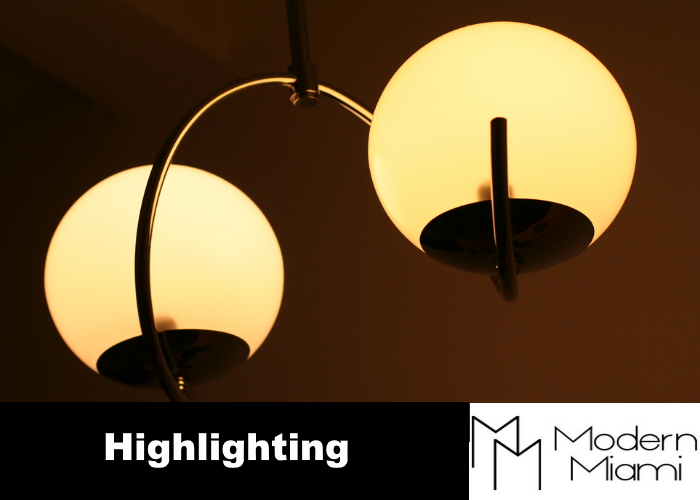
Highlighting, aka accent lighting, can draw greater attention to items like artwork, fireplaces, plants, walls, and decorative and architectural features. Track lighting or bulbs that are properly positioned and angled can highlight objects. The ideal highlights are often located close to the object(s) that require focus. When highlighting, direct and reflected light should be avoided. Additionally, separate switches should be provided for highlight fixtures so they can be used as needed only.
What is the Difference Between Highlighting with Other Lighting Techniques?
Depending on the desired aesthetic and utility of the room, ambient lighting and task lighting are also utilized to incorporate light fixtures in addition to highlighting.
By delivering general illumination, ambient lighting establishes a uniform and general lighting level. Ambient lighting, which is regarded as the initial layer of lighting, establishes the mood of a space. It may be altered to suit both daytime and nighttime conditions and is typically soft and diffuse.
The purpose of task lighting is to offer focused lighting for tasks like writing, reading, cooking, and grooming.
Highlighting differs from ambient and task lighting in that it primarily serves to improve a space’s aesthetics by fostering style, drama, and emphasis.
Why Use Highlighting?
Along with accentuating certain items or areas, highlighting is also used to draw attention to stairways, garden plots, walkways, and pathways. Highlight fixtures may also serve as a standalone ornament or decoration. Additionally, highlighting helps influence the ambiance of a space and align it with seasonal trends.
Highlighting may be achieved with the following fixtures:
- Torchere lamps
- Sconces
- Track lighting
- Recessed lights
- Wall-mounted picture lights
- Floodlights
Head to Modern Miami Furniture Store for the latest collection of Lighting fixtures for highlighting.


What are the Methods of Highlighting?
The act of backlighting involves beaming light from behind an object to provide the impression of depth. Positioning light directly, below, or around the object can also achieve backlighting. By providing shadows and shine, backlighting makes the object being highlighted intriguing. The most popular fixture used for backlighting is LED tape light which works well in alcoves, behind screens and displays, under furniture and cabinets, and under stairs.
Display lighting highlights a particular object or region with a specific focus. The most suitable way to highlight sculptures, vases, plants, and other items is to use display lighting. The best options for display lighting are track lights or reflector bulbs.
Wall-washing is done by shining light from floor to ceiling on a whole wall. This highlighting technique gives the impression that a room is larger or draws attention to the architecture and art. Wall-washing can be done with track lights, directed lighting, and recessed eyeball lights.
Fixtures that direct light upward are used in uplighting. Standing lamps, several types of wall sconces, and silver crown bulbs can all be used to draw attention to high and vaulted ceilings. To draw attention to outdoor features like fountains, trees, plants, and sculptures employ landscape bullet fixtures. Additionally, uplighting fixtures can be tilted to add an artistic dimension to a home or structure.
