


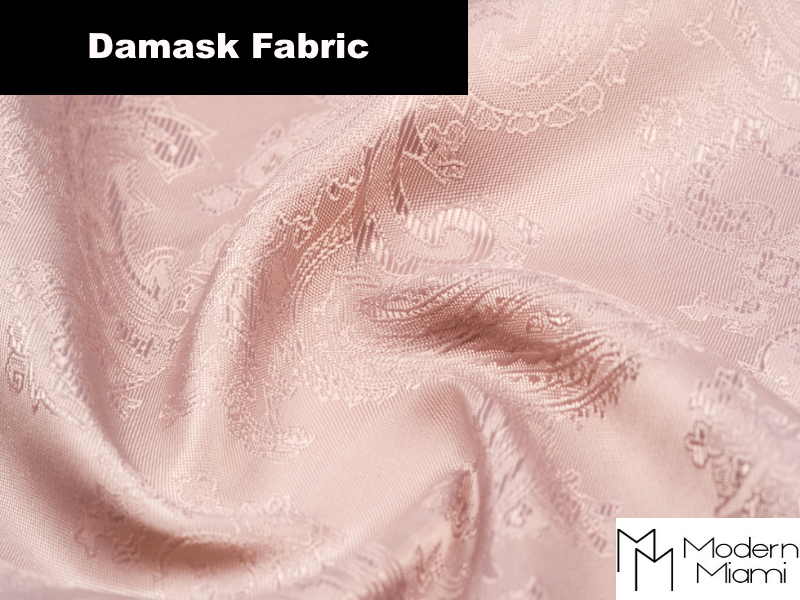
Damask fabric is a jacquard-patterned, reversible fabric woven from silk, wool, linen, cotton, or synthetic fibers. One warp thread and one weft thread are used to weave patterns for damask fabrics, which can be either one color or several colors. The background of the damask fabric is made of a weft-faced weave. The pattern is made from a warp-faced satin weave.
What is the History of Damask Fabric?
Damask cloth was primarily used by women to weave goods like carpets. In the Byzantine and Middle Eastern weaving centers of the early Middle Ages, damask fabric weaving was one of the five most important weaving techniques. Typically, women would pass down these weaving techniques from generation to generation.
What are the Characteristics of Damask Fabric?
Strong and tightly woven, the damask fabric is typically used as a decorative textile. The stratified tight weave that gives the damask fabric its thickness and weight also gives it durability. The damask fabric’s pattern can be seen on both sides because it is reversible. Because of its satin weave, the damask fabric has an extra visual sheen and luster.
Is Damask Fabric Used Today?
Computerized Jacquard looms are used to weave modern damask fabrics.
Damask fabric is used today for:
- Ornament and decor- upholstery, curtains, wallpaper
- Table linens- napkins, table runners, tablecloths
- Accessories- scarves, handbags
- Fashion- jackets, evening dresses
Where is Damask Fabric Most Produced?
The most superior type of damask fabric is silk damask or real damask. This type of damask fabric is mostly produced in India. India also tops the list of nations that produce cotton damask clothing. Australia is the country that produces the most wool damask fabric and is the type most popular in fashion. China, the world’s leading producer of synthetic textiles, leads the industry in creating synthetic damask fabric.
