


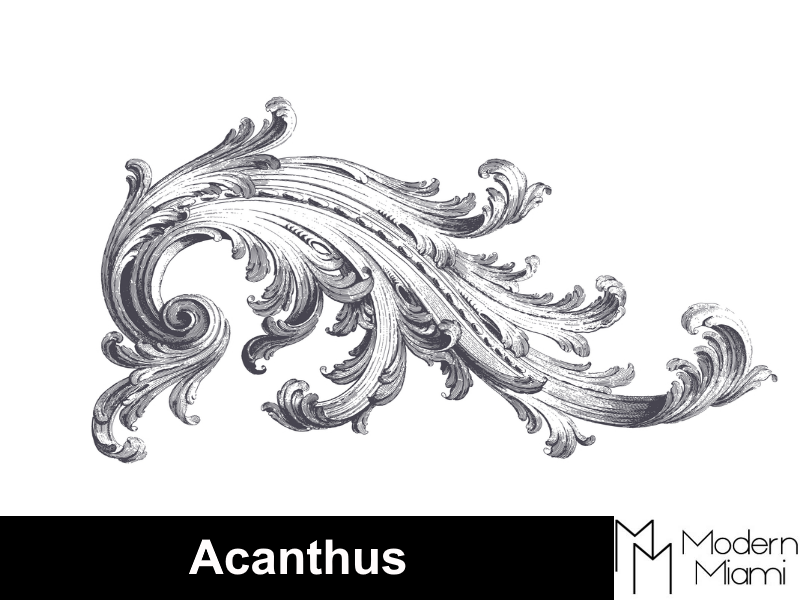
Acanthus or Bear’s Breeches is a genus of about 30 flowering plant species in the family Acanthaceae that thrive in tropical and mild temperate temperatures. The Greek term “akanthos,” which is frequently used in Corinthian architecture, is whence the name “acanthus” originated. The biggest concentration of Acanthus plant species may be found in the Mediterranean Basin and Asia.
Meaning of Acanthus?
Acanthus has thick, spiny leaves with uneven zigzagged edges, similar to dandelions or thistles. The leaves of Acanthus have been used in Greek architecture since 500 BCE to represent rebirth, immortality, and resurrection.
First Users of Acanthus in Design?
Acanthus spinosus and Acanthus mollis leaves were used in columns, friezes, stone carvings, and furniture by the Greeks and Romans.
The Greeks were the first to use the acanthus design in their roof lines, Corinthian and Composite column capitals, and wall friezes. The Romans refined the acanthus design by incorporating the curling of its leaves, which is commonly seen in their important structures. Acanthus was used in the design of Byzantine, Romanesque, and Gothic architecture. The Renaissance period saw the revival of acanthus design, which continues to this day.
Acanthus in Modern Furniture?
William Morris popularized the use of acanthus plant leaves in modern design in the 1800s. Other notable designers who used acanthus include Thomas Chippendale, a well-known English cabinet maker, and Robert Adam, a well-known British neoclassical architect. The acanthus plant leaf can now be found in hardware, furniture, moldings, lighting, decors, carpets, mirrors, upholstery designs, rugs, and a variety of fixtures.
The curving and organic singular ends of the acanthus leaf strike a balance between order and nature. The acanthus leaf is most commonly used in detailed ornamental furniture designs for chair knees, leg stems, and table friezes.
