


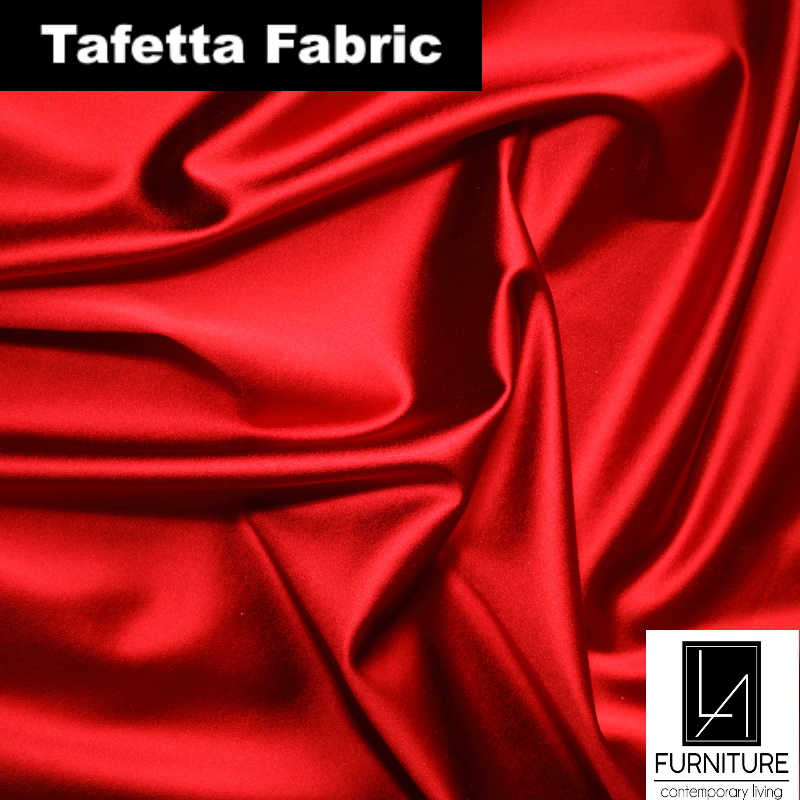
Taffeta fabric is a lightweight, smooth, crisp, plainly-woven fabric usually made of silk and features a shiny gloss. Other materials may also be used for taffeta fabric including nylon, acetate, synthetic fibers, and polyester. Taffeta fabric is commonly used to make high-grade clothing such as skirts, coats, blouses, jackets, corsets, and evening gowns. Taffeta fabric is also used for creating high-quality curtains and home decorations.
Where Did Taffeta Fabric Come From?
Earlier taffeta fabrics came from 18th century France and were called “pompadour taffeta”. More modern taffeta fabrics came from Italy and France, and up to the 1950s, from Japan. The Chinese province of Jiangsu manufactured taffeta fabric made of silk from the 1970s through the 1990s. India and Pakistan are the top producers of raw silk taffeta fabric today.
What are Notable Uses of Taffeta Fabric?
Some notable historical uses of the taffeta fabric are:
- Making balloons, pioneered by Joseph Montgolfier in 1782 led to the first human flight in a “lighter than air” aircraft
- Connected to English Renaissance prostitution as referenced in some of Shakespeare’s plays
- The make-up of blood vessels was mimicked with synthetic fiber taffeta fabric in the 18th century
- Tabby, a form of silk taffeta, was used to name tabby cats in the 1600s
What are the Types of Taffeta Fabric?
The following are the top types of taffeta fabric:
- Silk taffeta
- Paper taffeta
- Moire taffeta
- Synthetic taffeta
- Antique taffeta
- Piece-dyed taffeta
- Yarn-dyed taffeta
- Faille taffeta
- Shot silk taffeta
- Stretch silk taffeta
- Embroidered taffeta
What are the Advantages and Disadvantages of Taffeta Fabric?
The advantages of taffeta fabric:
- Makes for high-grade and high-quality products because of its crisp and shine
- Able to retain its shape even through time
- Provides a pliable material
- Maintains its smoothness without pilling
The disadvantages of taffeta fabric are:
- Can be expensive especially if made of silk
- Prone to creasing, snagging, and pulling
- Does not stretch as much as other fabrics
- Can be hard to sew with because of its slippery material
