


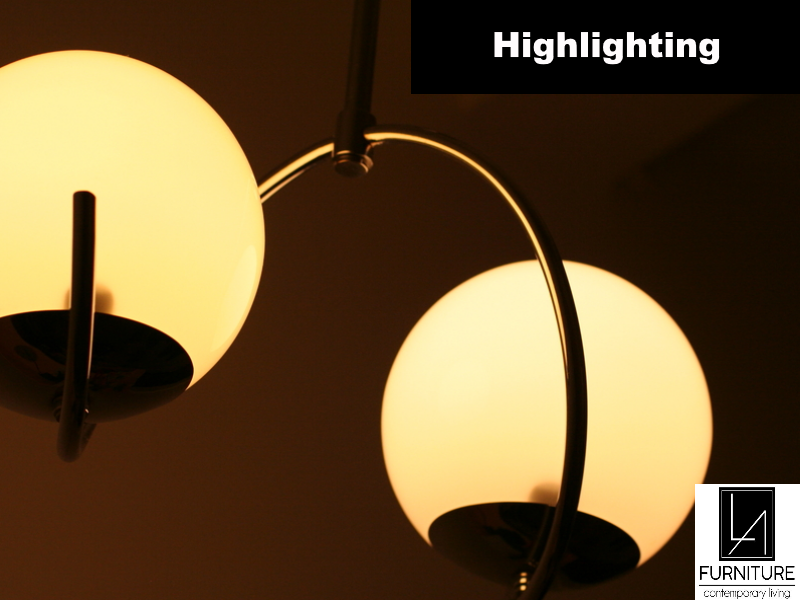
Highlighting or accent lighting gives focus on specific objects by drawing the light directly on them. Objects such as art, fireplaces, plants, walls, and decorative and architectural details can be given more attention through highlighting. Highlighting is done by the right positioning and angulation of track lighting or bulbs. Proper highlights are typically near the object/s that need emphasis. Direct and reflected light should be avoided when highlighting. It is also best to have separate switches for highlight fixtures so they can be used only when needed.
What are the Other Types of Lighting?
Apart from highlighting, ambient lighting and task lighting are also used for incorporating light fixtures in a space depending on its desired aesthetic and functionality. Ambient lighting creates a general and consistent lighting level by providing overall illumination. Ambient lighting dictates the mood of a room and is considered the first layer of lighting. It is usually soft and diffuse and can be adjusted to suit both daytime and nighttime. Task lighting is specifically placed to provide concentrated lighting for activities such as reading, writing, food preparation, and grooming.
Highlighting can be differentiated from ambient and task lighting in its main purpose to enhance the aesthetics of a space, creating style, drama, and focus.
What is the Use of Highlighting?
Aside from accenting a certain object or space, highlighting is also utilized for stairways, movie theaters and walkways, garden plots, and pathways. Highlight fixtures may also act as a decoration or ornament in themselves.
The advantages and benefits of highlighting in the home or office are the following.
- Creating central spaces within a room
- Accentuating a wall or wall decor
- Controlling the atmosphere and mood of a room
- Coordinating your space according to seasonal styles
What are Examples of Highlighting Fixtures?
Highlighting can be created in a room by using the following.
- Sconces
- Floodlights
- Recessed lights
- Torchere lamps
- Track lighting
- Wall-mounted picture lights
LA Furniture Store has modern Lighting fixtures for highlighting spaces in your home.


What are Current Techniques of Highlighting?
Current techniques for highlighting are backlighting, display lighting, uplighting, and wall-washing.
Backlighting is the practice of shining light from behind an item to provide the appearance of depth. This can also be done when light is positioned around or below the object or area you wish to highlight. Backlighting creates mystery for the highlighted object by producing shadows and glow. LED tape light is the most common fixture used for backlighting. This highlighting technique is ideal inside alcoves, under cabinets and furniture, behind screens and displays, and under steps.
Display lighting targets a specific object or area for highlighting. Displays inside glass cabinets, or on alcoves and shelves are perfect subjects for display lighting. Plants, vases, tableware, and sculpture are best highlighted using display lighting. Track lights or reflector bulbs are top choices for display lighting.
Uplighting uses fixtures that channel light towards the ceiling. High and vaulted ceilings can be highlighted with the use of silver crown bulbs, standing lamps, and some types of wall sconces. Landscape bullet fixtures can be used to highlight outdoor subjects like fountains, sculptures, trees, and plants. Uplighting fixtures may also be angled to achieve artistic definition for a house or building.
Wall-washing involves directing light to an entire wall, floor to ceiling. This highlighting method creates an illusion of increased space in a room or directs the focus to artwork and architecture. Track lights, directional light fixtures, and recessed eyeball lights may be used for wall-washing.
