


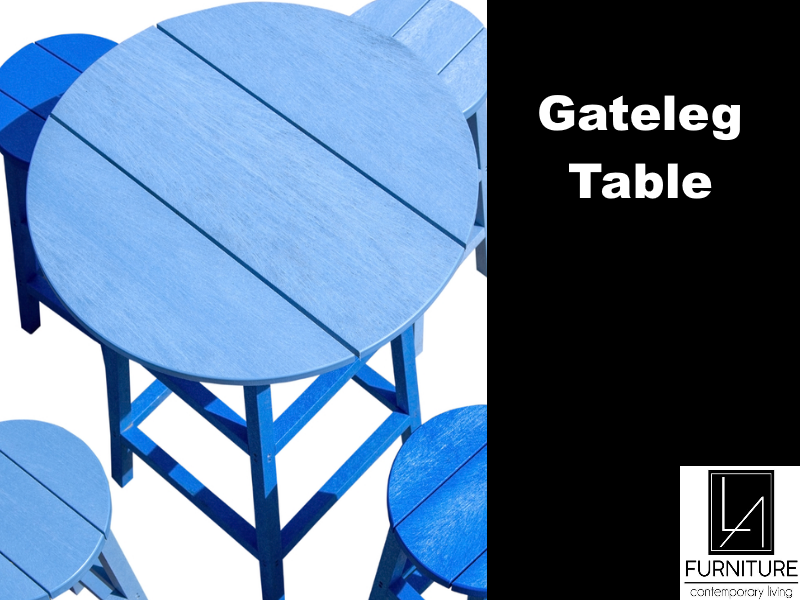
The gateleg table is furniture used in 16th century England consisting of a tabletop with a fixed section and one or two hinged leaves that can be folded down below the fixed section to hang vertically when not in use. A gate was created by the hinged portion, or flap, which was supported by pivoting legs connected at the top and bottom by stretchers. Large flaps featured two supports, which had the benefit of giving the center more room for free-standing legs.
What is the History of the Gateleg Table?
The term “gate” in the gateleg table comes from the pivoted legs of the furniture attached to each other by crosspieces. The gateleg table’s D-shaped drop leaves are supported by the “gates” when raised. The 16th-century English gateleg tables came in oval or round shapes for intimate dining purposes. These took the place of long dining tables that can accommodate the whole household or several guests.
The gateleg table was introduced to colonial America in the 17th century commonly in the William and Mary style. These gateleg tables came with thick legs and were used in households with limited space.
In the 18th century, a variation of the gateleg table known as the spider-leg table featured legs thinner than its previous versions.
What is the Difference Between a Gateleg Table and a Drop Leaf Table?
A drop leaf table has two hinged leaves hanging vertically along its sides which can be raised to provide for a larger table space. The main purpose of the drop leaf table is to maximize utility and functionality. It has a simple mechanism requiring no additional parts and no need for effortful adjustments. Visit LA Furniture Store for modern table furniture.
The gateleg table is actually a subtype of the drop leaf table where the leaves are supported by the table’s legs rather than the fixed center of a drop leaf table. The table space of the gateleg is less compared to the drop leaf which makes it more ideal for small spaces. It can be stored more easily and can be taken outdoors.
