


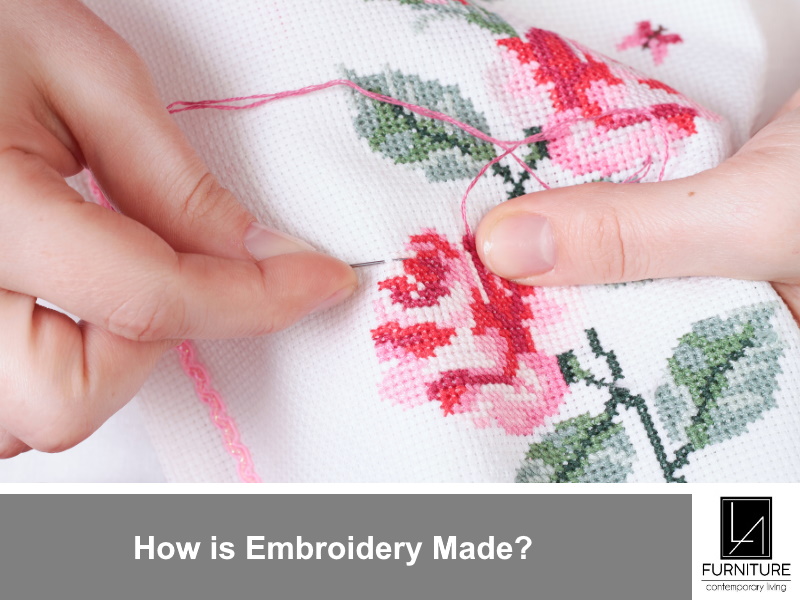
Embroidery produces designs on fabric with the use of a needle and thread. Numerous cultures throughout the world have used embroidery (needlework) since 30,000 BCE. The most common needlework technique is hand embroidery. Linen, clothing, and even furniture become more aesthetic by incorporating decorative objects through embroidery
How is Embroidery Made?
The art of adorning fabric with thread or yarn and a needle is embroidery. Certain forms of needlework incorporate quills, beads, sequins, beads, and pearls as key components. Needlework is used to embellish various items, such as clothing, cloaks, blankets, backpacks, headgear, and furniture. Embroidery is normally created by hand, but modern inventions have introduced the hand embroidery machine.
What is the origin of Embroidery?
Embroidery has been practiced by several cultures since 30,000 BCE. During the Warring States period in China, tombs from the 4th century included embroidered textiles. The first needlework, embroidered with dragon and phoenix designs, is the first needlework unearthed in the province of Mashan, Hubei.
Needlework in Japan began during the Kofun period in the 7th century. In Ancient Japan, embroidery was used for religious purposes and mostly featured Buddha.
The Battle of Hastings in 1066 is shown on the Bayeux Tapestry, which is an embroidered linen tapestry.
The hand-stitched pieces of King Tutankhamun from the 14th century BCE were the most renowned needlework items in Egypt. These goods include a floral collar, ceremonial tunics, and a leopard hide for decoration.
Embroidery in India developed during the Mughal era in the 16th century. Hook embroidery, or “ari” or “hook,” was used to adorn leather, saris, and wall decor.
The late 18th and early 19th centuries, during the industrial revolution, saw the dawn of embroidery machines. France was the first nation to use machines for embroidery, which led to the widespread production of needlework items.
What is the Most Famous Type of Embroidery?
Hand embroidery is the most famous type of embroidery. Hand, or surface embroidery, is the use of embroidery stitches to embellish fabrics or garments (i.e., running stitch, back stitch, satin stitch, etc.).
The following are the famous types of hand embroidery.
- Cross-stitches are X-shaped stitches. Cross-stitch is usually used for embroidering sentiments and messages on grid-patterned woven fabrics.
- Crewel embroidery uses two wool threads simultaneously. Crewel embroidery is used to highlight a theme on a surface.
- Stumpwork embroidery creates designs with three-dimensional depth on fabrics. Padding, beads, and wires are used to produce 3-D forms.
- Blackwork stitch produces designs using a tapestry needle. A tapestry needle has a blunt tip that is used on larger woven fabrics like crochet and knit and crochet, even-weave materials like canvas, and plastic canvas.
- Surface embroidery (freestyle embroidery) is a modern embroidery method that does not follow to a specific style.
- Thread painting is used to replicate textile painting and uses long and short stitches of various colors.
Embroidered Furniture?
The application of embroidery to furniture enables the transition of normal items, the creation of remarkable layouts, and the refashioning of old furniture. Simple embroidery methods and colorful floral patterns look beautiful on durable fabrics. Embroidery converts furniture into a decorative and artistic work of art.
