


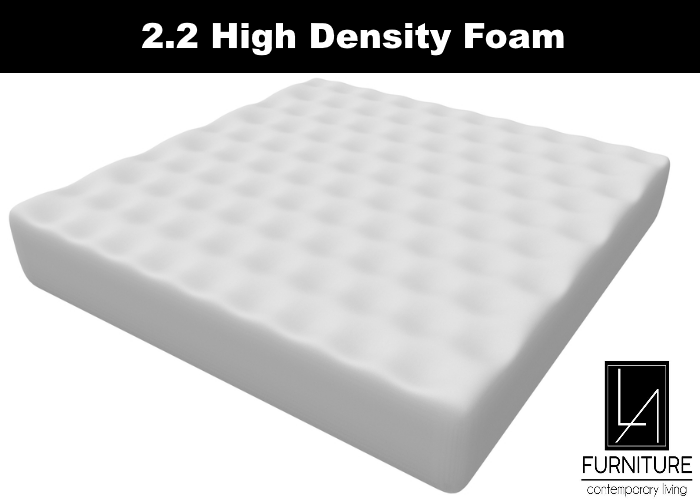
A 2.2 high density foam is considered the best density for residential furniture. To obtain the density of foam in furniture, a block of foam is weighed measuring 12 x 12 x 12. A density of 2.2 indicates that the foam block weighed 2.2 lbs.
Who Invented High Density Foam?
L.W. Schatz, the creator of General Plastics Co., started experimenting with polyurethanes created for military use at the end of World War II. Schatz mentioned how polyurethanes could be used for miniature tires, shoe soles, sealants, and surface coatings. Polyurethane was blended with a bubble-blowing chemical to produce high density foam. The resulting new material was widely hailed as thermal insulation, cotton batting, and flotation device alternative.
Why Choose 2.2 High Density Foam For Furniture?
Furniture with 2.2 high density foam is a medium-quality industrial-grade foam. Mattresses, medium-quality sofas, chair cushions, bay windows, yachts, and camping pads are the main uses for 2.2 high density foam. The most popular form of foam used in the making of furniture is high density foam.
Denser foam in furniture is more expensive than low density foam as more material is packed in the cushion. Having a 2.2 high density foam for furniture will allow it to soften more slowly and expand more through use compared to low density foam. 2.2 high density foam may take 5-10 years before it needs to be replaced.
Are There Any Sustainable Efforts Made For 2.2 High Density Foams
Greener polyols for foam production are extracted by biotechnology firms like Cargill. The company’s soy-based polyols are used in an expanding number of goods. According to testing, the foam made from soybean oil meets the same specifications for density and flexibility as conventional FPF. This alternative foam can be recycled once its useful life is through but is no less flammable or biodegradable than standard foam.
