


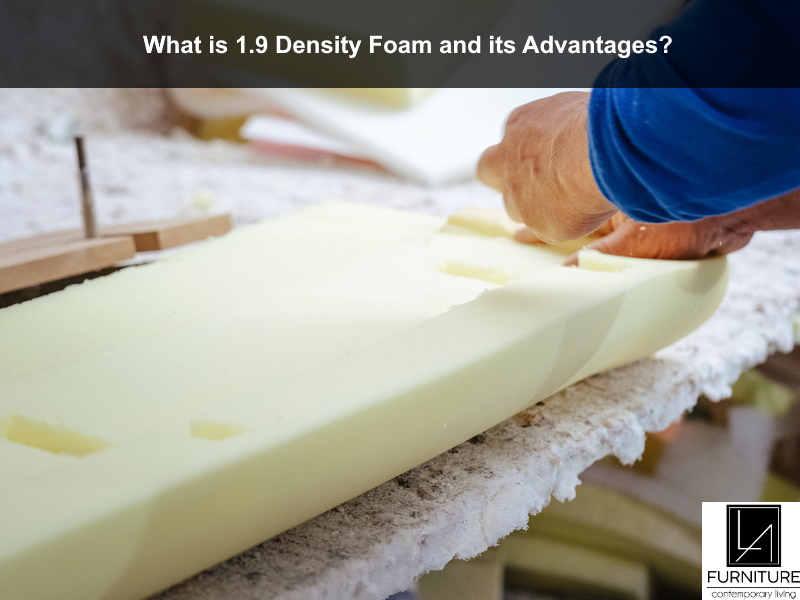
1.9 density foam means that the foam can tolerate 1.9 lbs per cubic foot. Foam density of furniture is defined as the mass of the foam within a cubic foot. Foam with a higher density is more compact and heavier. Foam density is commonly measured via pounds (lbs) and is calculated by dividing the foam mass by its unit volume. Foam density is different from foam firmness. Firmer foam does not necessarily mean better quality and longevity of the furniture. Foam with high firmness means it is less compressed upon application of pressure.
What is the History of Foam Usage in Furniture?
Foam comes from the natural latex produced from the rubber tree sap. Since 500 BC, the foam has been used by the Mayans and Aztecs. Synthetic or man-made foam was born in the 1900s. At present, natural and synthetic foams are in use. 1.9 density foams are usually made of polyurethane- the most commonly used variety of foam in furniture today. Polyurethane is a synthetic foam that was developed in Germany back in 1937.
What are the Advantages of 1.9 Density Foam?
1.9 density foam falls within the category of industry-grade foam for furniture. 1.9 density foam is sturdier and can last longer compared to its lower density counterparts. The conformity of 1.9 density foam and its ability to offer support is higher. Odor and temperature control, as well as motion isolation, are at standard levels for 1.9 density foam.
What is the Lifespan 1.9 Density Foam?
The lifespan of foam furniture depends on the density and thickness of the foam. Resiliency is also important to consider for furniture longevity. High resiliency (HR) foams with higher density typically last longer. 1.9 density foam can last for 3-5 years on average.
